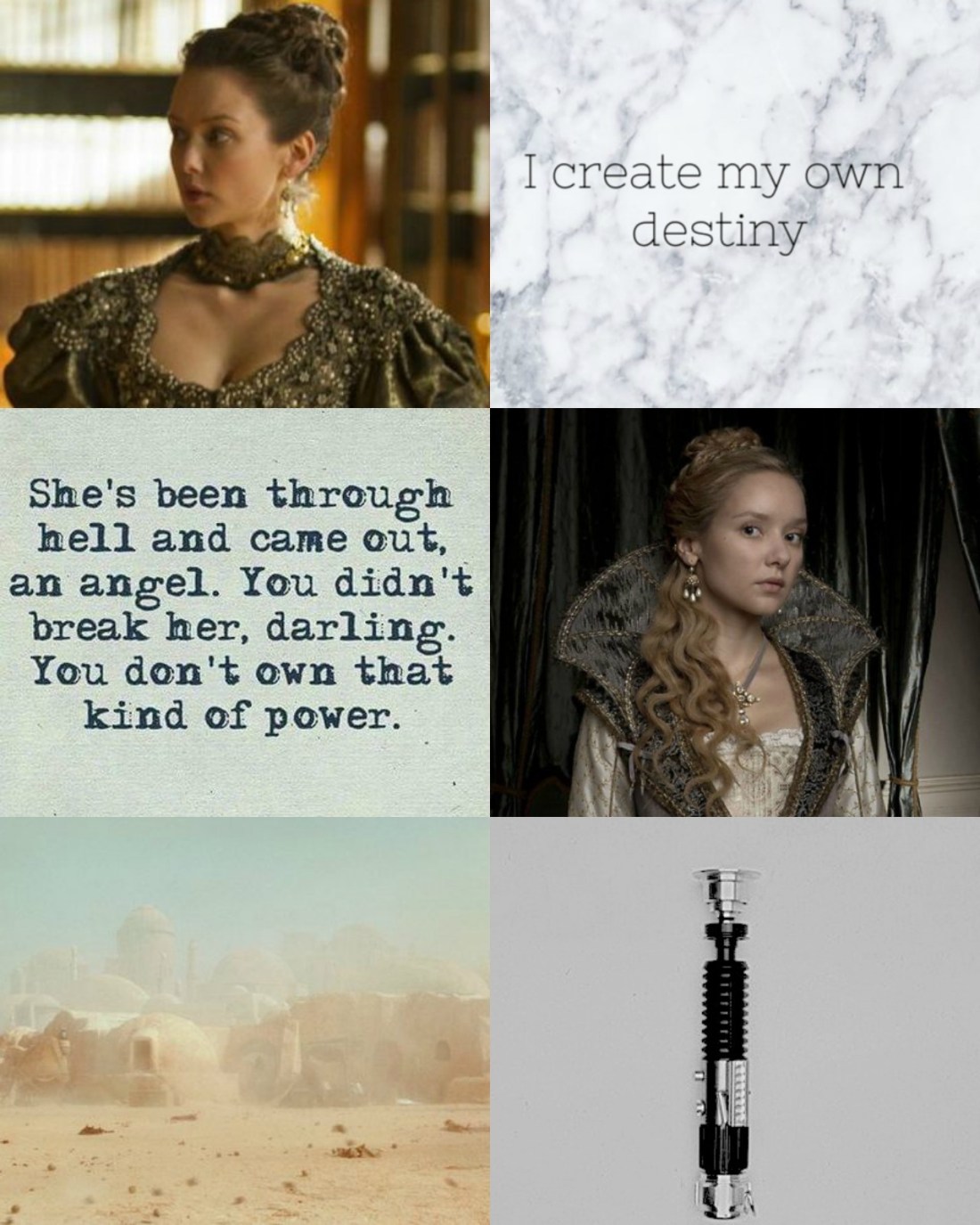
So, this is something I’ve kind of been wanting to make for a while and you may notice something different from the moodboard I made for The Jedi Senator in that, instead of Amanda Seyfried as Annika, I put Alexandra Dowling and honestly that’s because I’ve found myself picturing her more as Annika.
I loved Dowling in The Musketeers and personally, I think she probably captures Annika’s strength the best.
So yeah, Alexandra Dowling is now my fancast for Annika Skywalker
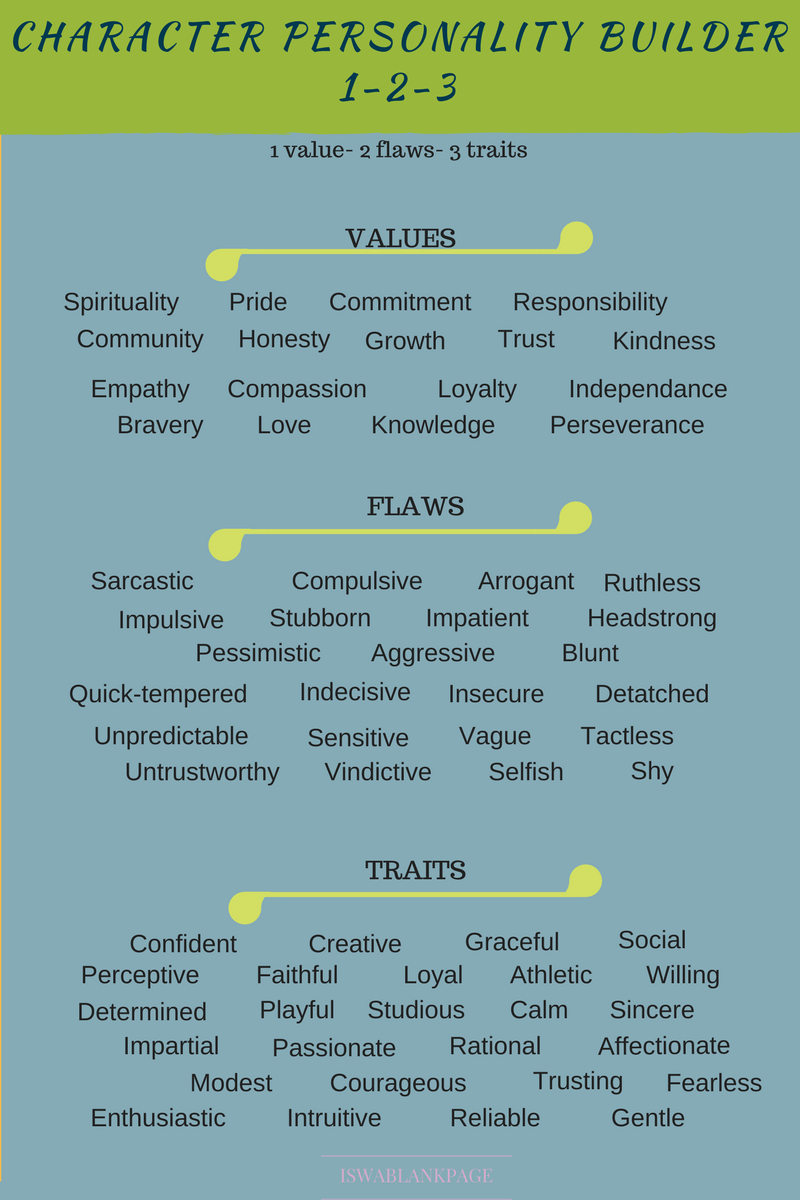
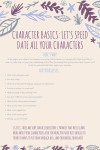
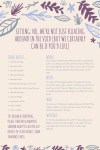
I made this today as I find it’s a helpful tool when I make characters. I call it the 1-2-3 method.
1 value: Their core belief.
2 flaws: The limitations of the character. Things that can affect their actions and abilities.
3 traits: What makes them, them. the aspects of their behaviour and attitude.
It’s important that you justify their personality through their backstory and home life, however, and it’s good to have conflicting flaws/traits within a group which will help create tension and drama.
I’m using this today to create characters for my campnanowrimo WIP and thought I’d share.
Several years ago I attended a writing workshop at LDStorymakers that was focused entirely on creating side characters. One of the points made that struck me most was that when you create strong secondary characters, you make your novel feel authentic. You make it feel real.
This is because as an audience we don’t feel as if all the side characters exist for the sake of the main character or the plot. They feel like real people with lives that extend beyond our protagonist. And yet sloppy side characters aren’t uncommon. You’ve probably seen them before–the love interest that is only there to kiss the protagonist, the mentor that’s only there to give the main character special skills, that poor geeky kid who’s only there so that the main character can show off how kind and caring he is by sticking up for the weirdo, and of course, how can we forget the two-dimensional bully that every hero has these days?
Keep in mind that none of these character roles are bad or wrong per se. In Harry Potter, J.K. Rowling gave Harry a bully, a mentor, and a bunch of geeky kids he stands up for, but Rowling is a master at creating real, authentic secondary characters, to the point that it’s not uncommon for fans to point to one as their favorite (Luna Lovegood, Fred and George Weasley, Dobby, McGonagall).
The trick is to make your side character feels real, and in this post, I’ll give you some tips on how to do that.
Different Degrees of Characters
Before we get too far into this though, I want to mention a warning. Not every character on the page needs to be fully realized. Sometimes the taxi driver who is driving your protagonist to the airport is really just a taxi driver. He’s referred to once and never mentioned again. Don’t get all excited after this post and try to over-characterize everyone. You don’t need to give the illusion of fleshing out every character in the coffee shop your protagonist is reading at. Think of these sorts of people as an extension of the setting. For this post, I’m talking about secondary or tertiary characters. They aren’t “set” pieces, but they aren’t the main characters either (and almost never the viewpoint character). They are the space between.
Tricks to Creating Great Side Characters
Suggest that They have Their Own Lives
Side characters should have their own lives. The sum of their existence should not be their role in relation to the main character. Often we don’t see much of their lives, but it should be suggested that they have them. It might be a ballet audition a cousin is practicing for mentioned in passing. It might be Dumbledore having to travel to the Ministry in London in Harry Potter and the Sorcerer’s Stone. It might be the fact that Mrs. Hudson got all her money from her dead husband, who actually ran a drug cartel.
Their lives can be implied in passing or can crop up in direct dialogue. Maybe they even refuse to help the protagonist because they can’t miss their dream job interview. You don’t need to fully flesh out every side character’s life. You just need to suggest that they have one beyond the protagonist and main plot.
Give Them a Unique Characteristic or Skill
So often I see side characters that are generic or “stock” characters. Like I mentioned in the intro, the bully who is just like every other bully in every other story. If you have a bully, cool, but give him a characteristic that sets him apart from all the other bullies. Bonzo in Ender’s Game is a good example. He’s definitely a bully, but he’s very small. He’s not portrayed as a complete idiot, like most bullies, but he’s not as intelligent as Ender either. Orson Scott Card also takes time to specify what kind of anger Bonzo has. It’s a hot anger, a blinding anger. And he compares it to Ender’s, which is cold and controlled. The specificity makes Bonzo seem like a real person, not a cardboard cut-out to pester the protagonist.
Pick characteristics that are unusual, but they don’t need to be outlandish. Maybe the love interest (who isn’t a big player in the story, but exists) has a stuttering problem. That’s unusual. It feels real.
Love him or hate him, in a lot of his movies, M. Night Shyalaman is pro at giving his characters unique attributes or skills. Just watch Lady in the Water and you’ll see what I mean. We have Reggie, a guy who weirdly only exercises one side of his body, Mrs. Bubchik who can’t help but divulge her husband’s embarrassing secrets every time she talks to someone, Joey Dury who enjoys making up stories based off cereal boxes, and his father who loves crossword puzzles. Then there is Mrs. Choi, who doesn’t speak English and is unfriendly to everyone but children.
To top it off, each of these characters seem to have their own lives. You can see this same thing happening in The Village, The Visit, and Signs.
To make your side characters feel real, give them a unique characteristic or skill, and then be specific about it.
Look at the Roles They Fulfill and Have Them Fulfill Them in Interesting Ways
There are many tropes and archetypes in the world, but that doesn’t mean all the characters who fulfill them need to be the same. I’ve said this before, but in The Hunger Games, Haymitch fulfills the “mentor” role, and yet his character is so unique from the stereotypical mentors. He doesn’t have this refined air of wisdom like Dumbledore or other mentors have. Haymitch is a drunk. How great can a mentor be if he is drunk? What in interesting combination.
Molly Hooper in Sherlock is one of my favorite characters. She’s a pathologist. Seen them before. Seen that sort of thing a lot on detective shows. But Molly isn’t a role, she’s a person. And what makes her stand out from all the other characters in that role is that she’s awkwardly cute with what could almost be considered a “schoolgirl crush” on Sherlock (who is often uninterested or blind to such things). Furthermore, she’s awkwardly cute in her own way, rather than a stereotypical, generic, or stock way.
On the flip side, you could say she fulfills the role of that character who has a crush on the protagonist, but the fact she is a pathologist, works in the morgue, is romantically attracted to psychopaths, enjoys working with dead bodies, and has her own unique demeanor puts a spin on that role too. So you can also smash roles together in interesting ways.
Whatever your side character’s role, brainstorm a unique take on it. You don’t need to give your mentor an air of wisdom and poise. The love interest doesn’t always have to be seductive and flirty.
Imply Character Arcs and Suggest Changes
Side characters are side characters. We don’t usually see a full arc from them like we do the main characters. But you can still give us the sense that they are growing and changing, on a small scale or a significant scale. It could simply be one side character saying he doesn’t want to ever get married in the opening, and then in the denouement, saying he does want to get married. It can be a bigger arc. Neville in Harry Potter has his own full arc, moving from social outcast to hero.
In Sherlock, Lestrade goes from trusting Sherlock with everything in season one to thinking Sherlock is a killer in season two. Anderson goes from hating him to immortalizing him by starting a fan club of sorts. Ginny Weasley moves from being shy and silent to being the most popular girl in her class. Great side characters are in motion.
Character arcs often refer to growth or decline in internal progression. But you can also have changes. A change is just a change. It can be a character changing the way she looks from one scene to another. It can be a change in what the character drives. It can be a change in health. Or a change in who he is dating. Just be careful that the change doesn’t beg for more attention and explanation than you can give it. It shouldn’t draw attention to itself to the extent that it slows the pacing or takes away from the story. It should be adding to the story, not taking away. But how much is too much is gauged by your own specific story, so I can’t give you a black-and-white answer.
Expand the Character
You can make your side character richer by expanding him or her. It’s not necessarily an arc or a change, it’s just that the audience learns more about the character in a later scene than they knew before. For example, when we first meet Mrs. Hudson, we are told that Sherlock helped her out with a legal case about her husband, which resulted in Mr. Hudson’s death (which ironically, was the outcome Mrs. Hudson wanted). In a later scene we learn her husband ran a drug cartel. So you can expand something we knew before. Another option is to add something different. Luna Lovegood’s father runs The Quibbler. In a later scene we learn that Luna’s mother died in an experimental mishap. They aren’t related, but our knowledge about the character is expanded.
This can be a great way to make a side character become more interesting in a later scene.
Use Thoughtful Descriptions
How you describe your side character can make them feel real. Like I’ve talked about in another post about descriptions, your descriptions should move beyond the generic. We need more than hair color, eye color, and maybe height. Describe something that doesn’t get described enough–elbows, ears, legs, nose, the tone of her voice, her facial expressions. You can find a whole list of ideas here. You should probably note, however, that the attributes that gets described should usually be what makes your character most unique. Those are what people notice first. If his voice doesn’t match his appearance, then that’s probably what should be mentioned. If she has a birth mark in the shape of screwdriver on her neck, that’s probably what needs to be mentioned.
Also, often appearances can give insight into the character’s life, personality, and self-image. If she has a dancer’s build, she’s probably a dancer. If he has soil under his nails, he might be a gardener. If her shirt is inside out, maybe she doesn’t care enough to look in the mirror before she leaves the house. All these details speak to something more, something bigger, about the character. Molly Hooper doesn’t have lipstick in one scene, but she has it on when Sherlock comes–that tells us something about her and her feelings toward Sherlock.
Closing
In closing, as you work on creating stunning side characters, just make sure you don’t let them take over the story and main characters (unless you intended to break the rules and had that planned all along). Don’t forget who or what the story is really about.
Ah, the main character. If your story were a ship, they’d be the pilot. It’s their job to incite, propel, and solve the plot, all while making the readers laugh and smile and cry and get frustrated, and oftentimes they carry with them the moral lesson. This is a pretty tall order for one character, and deciding what kind of main character you’re going to have can be very stressful. Hopefully this list will help you with this process.
The main character can determine the audience.
This isn’t always true, but usually the age, gender, moral compass, and sometimes even physical appearance of the main character decides what kind of people are going to read the book. A book about a 14-year-old female fashionista usually attracts different readers than a 50-year-old FBI director. Don’t let this scare you, because there are outliers depending on how the character is written, but bear in mind that people of like-minded interests usually read books with main characters that share some of those traits, so plan accordingly.
The main character’s personality traits should coincide with the plot and theme of the novel.
High-fantasy and adventure novels are usually headed by strong-willed, talented, reckless characters. (Think Luke Skywalker or the Winchesters from Supernatural.) Realistic fiction, however, are usually home to goofier, more human characters (such as Greg and Earl in Me and Earl and the Dying Girl). While your main character doesn’t have to be the cookie-cutter model of the “normal” protagonist for genre and theme, they should exhibit at least some of the traits. Give some of the entertaining, off-color traits to supporting characters if you can’t live without them.
Make them human.
Real people are complicated. Their emotions and actions are driven by complex, sometimes misguided desires. Real people make mistakes for much the same reason. Real people doubt themselves, and they have low and high points. Real people change over time based on the people and circumstances they surround themselves with. Real people sometimes lie to others and themselves about their true motivations. Real people need help and support from others to reach their goals. Sometimes, real people never reach their goals at all. Characters should reflect all of this in their stories, especially main characters, with whom your readers should identify with and root for the most.
Make them likable.
This doesn’t mean they have to be perfect by any means, nor do they have to be friendly and sweet 100% of the time. Your main character can actually be a total asshole but still have readers like them or be entertained by them. The main thing is that you have to make sure that the reader roots for them, because if the reader is hoping the main character will fail or loses interest in them completely, you haven’t done your job as a writer. Beta readers can help you by telling you whether or not they like the main character and agree with their actions.
Make them fit their story.
Characters are TOOLS, just like every other story element. They are there to ad to the reader’s experience, and whatever triumph or turmoil they go through is so that the reader can be entertained and enlightened by their story. That’s why it’s important for them to be treated as such, and NOT like friends or ways for the author to live vicariously through their own story. We have fanfiction for that. When you’re writing, if it seems like your story is revolving around amking your main character happy, or that they’re becoming just too perfect to be entertaining, you may need to step back and re-evaluate their score on the Mary Sue litmus test and see if you’re writing a character or a mannequin doll.
My personal favorite character template sheet, written by Dehydromon on Deviantart. It’s the first link on FYCD’s post and has 370+ questions to answer about your character. (For a shorter version, go here.)
Writerswrite’s how-to-create-a-character guide. (It’s basically another template, but I thought I’d include it in case someone didn’t like the others I provided, and also because it comes from a more professional source than Deviantart and Tumblr.)
Wikihow’s tips on creating a fictional character from scratch. Their tips are very broad, but they leave a lot of room for interpretation as well, if you prefer that.
Thecreativepenn’s 5 tips for creating interesting characters. This article seems to be geared towards screenwriters, but the tips apply to all forms of creative writing.
To quote TheMarySue.com, strong female characters are rarely strong and rarely characters. Strong Female Characters™ are leather-clad, emotionless, “independent,” defined by their relationships to men, and often have a tragic backstory (often involving abuse at the hands of men). More often than not, they are portrayed to be just as powerful or even more so than male protagonists, but in the end are relegated to fighting the secondary villain(ess).
So here is my list of 20 things I want to see in strong female characters.
Strong female characters who are girly: Not “feminine,” girly. They don’t wear tight leather bodysuits, they wear pink dresses and curl their hair and are excited when Sephora comes out with a new blush product.
Strong female characters who are funny: I mean, come on. I can count on one hand the number of strong female characters who could be comedians.
Strong female characters who support other women: Don’t make them hate the girls who have sex or wear makeup. Don’t support the idea that femininity is weak.
Strong female characters who are not traditionally attractive: Make them fat. Give them acne. Maybe they have bushy eyebrows. Who knows?
Strong female characters who fall in love and remain strong: If she can lift a truck at the beginning of the story, getting the man will not change that. Being strong is not undesirable.
Strong female characters who are not physically strong: Why do they need to lift a car to be strong? Women can be mentally and emotionally strong too. Example: A WWII nurse who has to deal with recent amputees and vets with PTSD. Do you know how much strength that would require?
Strong female characters who are tomboys/manly: Be cautious with this one. There is a whole list of harmful tropes surrounding this idea. For more information, see TV Tropes’ Tomboy page.
Strong female characters who don’t use long-range weapons: Let them be the smasher for once. I want to see them throw punches.
Strong female characters who become stronger on their own accord: Have them want to do more, and train to become better or strive to learn more. BUT (and this is a big but) don’t make them do it because they were abused. Don’t.
Strong female characters who are LGBT*QIA: Enough said.
Strong female characters who are POC: See above.
Strong female characters who are older and not hardened by war: give me an prankster grandma or a general who is known as “mom.”
Strong female characters who have feelings: Please stop making them emotionless or merely snarky/sarcastic. I mean, have you ever met anyone who was only sarcastic and nothing else? People like that don’t exist.
Strong female characters who are strong because of women: Maybe their moms taught them how to fight. Maybe they were inspired by a warrior queen. Stop giving them five older brothers. Seriously.
Strong female characters who aren’t lone warriors: Give them a badass crew (bonus points if they’re all women) whom she considers her friends. Real people have friends.
Strong female characters who have a family: They need at least one family member that they love and want to protect. Stop making them estranged from their parents or orphans.
Strong female characters who cry: Please, let them have feelings.
Strong female characters who aren’t defined by men: Don’t give them emotion only when they fall for the male protag. Don’t make their backstory all about when they were abused by a man. Don’t give them mentors who are all men. Don’t attribute her abilities to men.
Strong female characters who don’t define men: Stop having her strength be the measure that the male protagonist must surpass. Stop having her death give motivation to the male characters. This must end.
Strong female characters who weren’t abused: Having rape/abuse as a motivation is a disgusting cliche. Stop it. Just don’t.
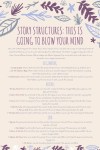
Now first, I have to say, that the plot you’re able to come up with in one day is not going to be without its flaws, but coming up with it all at once, the entire story unfolds right in front of you and makes you want to keep going with it. So, where to begin?
What is your premise and basic plot? Pick your plot. I recommend just pulling one from this list. No plots are “original” so making yours interesting and complicated will easily distract from that fact, that and interesting characters. Characters will be something for you to work on another day, because this is plotting day. You’ll want the main plot to be fairly straight forward, because a confusing main plot will doom you if you want subplots.
Decide who the characters will be. They don’t have to have names at this point. You don’t even need to know who they are other than why they have to be in the story. The more characters there are the more complicated the plot will be. If you intend to have more than one subplot, then you’ll want more characters. Multiple interconnected subplots will give the illusion that the story is very complicated and will give the reader a lot of different things to look at at all times. It also gives you the chance to develop many side characters. The plot I worked out yesterday had 13 characters, all were necessary. Decide their “roles” don’t bother with much else. This seems shallow, but this is plot. Plot is shallow.
Now, decide what drives each character. Why specifically are they in this story? You can make this up. You don’t even know these characters yet. Just so long as everyone has their own motivations, you’re in the clear.
What aren’t these characters giving away right off the bat? Give them a secret! It doesn’t have to be something that they are actively lying about or trying to hide, just find something that perhaps ties them into the plot or subplot. This is a moment to dig into subplot. This does not need to be at all connected to their drive to be present in the story. Decide who is in love with who, what did this person do in the 70’s that’s coming back to bite them today, and what continues to haunt what-his-face to this very day. This is where you start to see the characters take shape. Don’t worry much about who they are or what they look like, just focus on what they’re doing to the story.
What is going to change these characters? Now this will take some thinking. Everyone wants at least a few of the characters to come out changed by the end of the story, so think, how will they be different as a result of the plot/subplot? It might not be plot that changes them, but if you have a lot of characters, a few changes that are worked into the bones of the plot might help you.
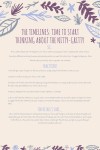
Now list out the major events of the novel with subplot in chronological order. This will be your timeline. Especially list the historical things that you want to exist in backstory. List everything you can think of. Think about where the story is going. At this point, you likely haven’t focused too much on the main plot, yeah, it’s there, but now really focus on the rising actions, how this main plot builds its conflict, then the climactic moment. Make sure you get all of that in there. This might take a few hours.
Decide where to start writing. This part will take a LOT of thinking. It’s hard! But now that you’ve got the timeline, pick an interesting point to begin at. Something with action. Something relevant. Preferably not at the beginning of your timeline – you want to have huge reveals later on where these important things that happened prior are exposed. This is the point where you think about what information should come out when. This will be a revision of your last list, except instead of being chronological, it exists to build tension.
Once you’ve gotten the second list done, you’ve got a plot. Does it need work? Probably. But with that said, at this point you probably have no idea who half your characters are. Save that for tomorrow, that too will be a lot of work.










 MissWriteress